Slow Down and See: How Yoshiko Chuma Rewires the Way We Pay Attention
Let's be honest about where most of us are right now. We're half-watching, half-scrolling, half-listening. We show up to things — concerts, dinners, even our own lives — with maybe sixty percent of ourselves. The other forty is somewhere in a notification feed, a worry spiral, a mental to-do list that never actually gets done.
Yoshiko Chuma has never been interested in your sixty percent. Her work wants all of you. And the wild thing is, it knows how to get it.
The Performance That Refuses to Let You Drift
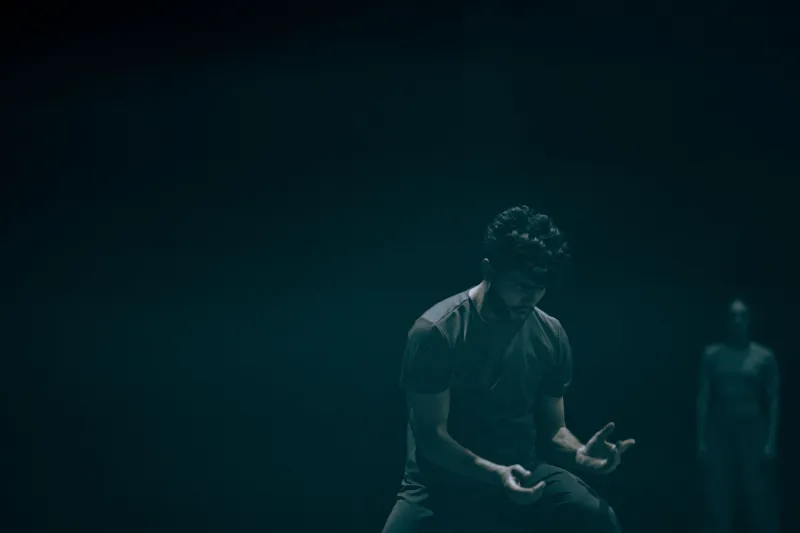
If you've ever been in a room where Chuma's work was happening, you know that familiar feeling of suddenly becoming very aware of your own breathing. Something shifts. The usual mental chatter quiets down. You stop trying to figure out what the piece is about and start just... noticing.
That's not an accident. It's architecture.
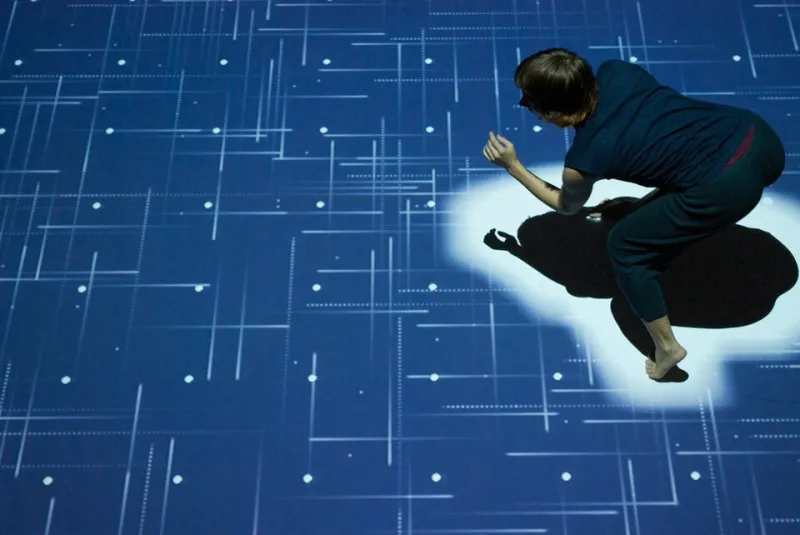
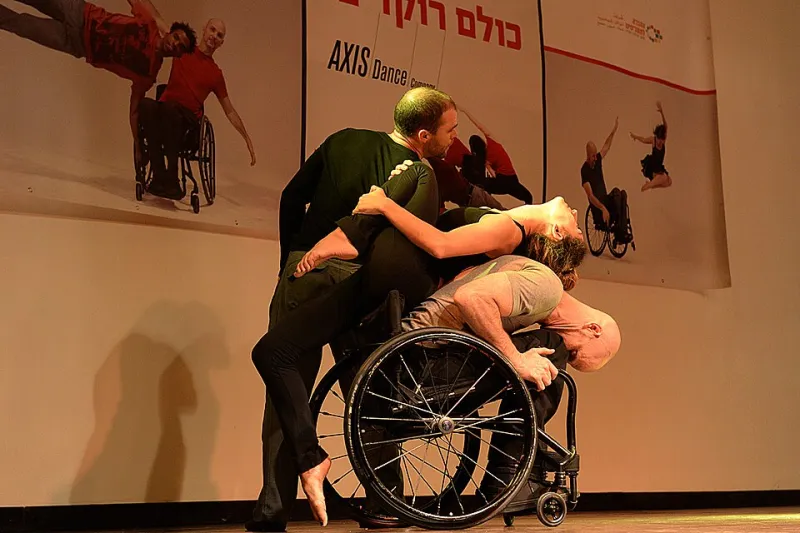
Chuma's choreographic practice is built around what you might call a philosophy of distributed attention — the idea that a performance space isn't a screen you watch from a safe distance, but a field of simultaneous events you actively navigate with your eyes, your body, your intuition. There's no single focal point telling you where to look. Multiple things are happening at once. You have to make choices. And in making those choices, you become a participant in the work itself, whether you signed up for that or not.
This is genuinely countercultural in 2025. We live inside media ecosystems designed by engineers whose entire job is to capture and hold your gaze. Every platform, every feed, every autoplay algorithm is optimized to make passive consumption feel like the natural state of being alive. Chuma's work is the opposite of that. It doesn't capture your attention — it liberates it.
Presence as Practice, Not Performance
There's a concept in mindfulness culture — you've probably seen it on a wellness app — about "being present." It's become a little bit of a cliché, honestly. A meme. But Chuma was working with presence as a rigorous artistic discipline long before anyone was selling it as a subscription service.
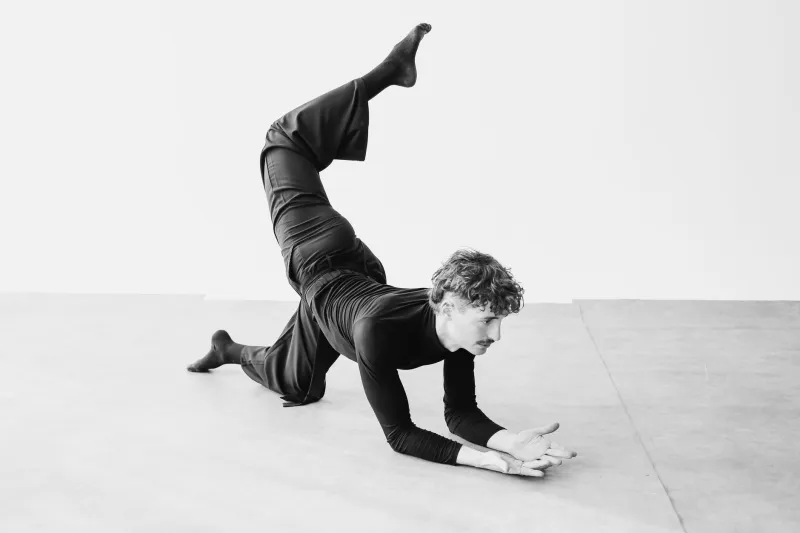
For her, presence isn't a soft, feel-good state you drift into. It's a skill. It's something you practice, sharpen, and bring to bear on the world with intention. Her rehearsal process is famous for demanding this from performers — not just technical precision, but a quality of aliveness in every moment, an awareness of the room, of each other, of what's actually happening versus what was planned to happen.
That distinction matters enormously. In a lot of dance training, the goal is to reproduce a planned sequence as faithfully as possible. Chuma's approach asks something more unsettling: can you be present enough to respond to what's actually unfolding, even when it diverges from the plan?
For audiences, this creates a particular kind of viewing experience. You can't zone out and then tune back in and feel like you've caught up. The work is happening in real time, and your attention is part of what's making it real.
What Neuroscience Accidentally Confirms
Here's where it gets interesting. Cognitive researchers have spent years studying what they call "open monitoring" — a mode of attention where instead of focusing narrowly on a single thing, you hold a broader, more receptive awareness of everything in your environment. It's associated with creativity, emotional regulation, and a greater sense of meaning and connection.
Chuma's performances essentially train audiences in open monitoring without ever using that phrase. By refusing to provide a single dominant focal point, by layering sound, movement, and spatial dynamics simultaneously, she creates conditions where the narrow, task-focused mind has to soften and expand. You can't experience her work in consumer mode. You have to shift gears.
What's fascinating is that this shift tends to linger. People who see her work regularly — the downtown New York crowd who've been following her for decades, the younger audiences who've discovered her more recently — often describe a kind of perceptual hangover afterward. They walk out of the theater and notice things differently. The light on a building. The rhythm of strangers walking past. The texture of a conversation.
That's not nothing. That's actually a pretty profound thing for an artist to do.
The Everyday Choreography Nobody Talks About
Chuma herself has spoken about performance as a lens for understanding ordinary life — the idea that if you pay attention closely enough, everything is choreography. The way people move through a subway car. The improvised negotiations of a crowded sidewalk. The unspoken rhythms of a family dinner.
This is a genuinely philosophical position, and it has real consequences for how her students and longtime collaborators move through the world. They tend to be unusually observant people. Unusually patient. Unusually comfortable with ambiguity and with the kind of slow, non-linear unfolding that most of us have been trained to find frustrating.
In a culture that treats attention as a resource to be efficiently allocated — spend it on things with measurable returns, skip the rest — there's something almost rebellious about learning to watch without agenda. To look at something and not immediately ask what it's for or what it means or how you can use it.
Chuma's work teaches that. Not through instruction, but through experience. You sit with it, or you stand with it, or you move with it, and somewhere in that process your relationship to watching changes.
Why This Matters Right Now
We're living through an attention crisis that's bigger and stranger than anything we have adequate language for yet. The average American checks their phone something like 96 times a day. We're consuming more content than any generation in history and reportedly feeling less connected, less creative, and less satisfied than people who consumed a fraction of what we do.
Yoshiko Chuma isn't offering a solution to this — she's not in the business of solutions. But her work offers something arguably more valuable: a direct, embodied experience of what it feels like to actually pay attention. To be genuinely present in a room with other humans, watching something unfold in real time that will never happen exactly this way again.
That experience is rare. It's worth seeking out. And if you let it, it has a way of following you home.
Keep an eye on the events calendar here at Yoshiko Chuma Universe — when her work is in a city near you, clear your schedule. Put your phone in your bag. Show up with all of yourself. You might be surprised what you notice.