Move Together, Heal Together: How Yoshiko Chuma's Teaching Philosophy Is Reshaping Dance Communities Across the Country
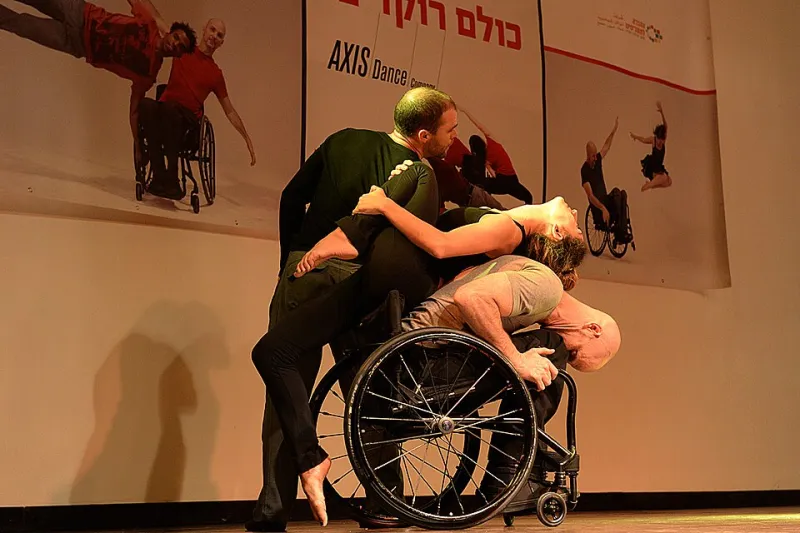
Photo: U.S. Embassy Tel Aviv, CC BY 2.0, via Wikimedia Commons
The first thing people usually say when they describe a workshop with Yoshiko Chuma is that they didn't expect to cry. Not because anything was sad, exactly — but because something in the room opened up that they hadn't known was closed. That's not an accident. It's the whole point.
Chuma has been making experimental performance for over four decades, but her influence as a teacher and mentor has become, in many ways, just as significant as her work on stage. The methodology she's developed — grounded in radical presence, collective vulnerability, and a deep suspicion of hierarchy — is rippling outward through a whole network of artists and community organizers who are using her frameworks in contexts she might not have originally imagined.
What the Workshop Actually Is
If you've never been in a room with Yoshiko Chuma leading a session, it's worth understanding what it isn't before you understand what it is. It isn't a technique class. There's no barre, no vocabulary to master, no correct way to execute a phrase. What there is, instead, is a sustained invitation to pay attention — to your own body, to the bodies around you, to the space itself, to the unexpected thing that just happened in the corner of the room.
Chuma's pedagogy is rooted in the belief that creative intelligence is already present in every body in the room. The teacher's job isn't to install something that isn't there — it's to create conditions where what's already there can surface. That sounds simple, but in practice it requires a total dismantling of the student-teacher power dynamic that most of us absorbed in dance training from the time we were kids.
"She never told me what I was doing wrong," says one New York-based performer who studied with Chuma in the early 2010s. "She'd ask me a question instead. And the question would be so specific to what I was actually doing in my body that I'd realize she'd been watching me more carefully than I'd been watching myself. That changed everything about how I pay attention in a room."
The Trauma-Informed Turn
Over the past decade, the language of trauma-informed practice has spread through dance education and community arts work in a big way. Organizations are rethinking consent, boundaries, and the psychological safety of the studio space. It's a genuinely important shift — and it's one that, if you look carefully, Chuma was quietly prefiguring long before the terminology existed.
Her insistence on full presence over technical perfection, her resistance to correction-as-control, her emphasis on collective creation rather than individual virtuosity — these aren't just aesthetic choices. They're structural choices that make the studio a different kind of place. A place where the body doesn't have to perform wellness or capability in order to belong. Where the weird, the hesitant, the unresolved thing you're doing is actually the most interesting thing in the room.
Community organizers working in contexts far outside the downtown New York art world have picked up on this. Arts educators working with incarcerated populations, with refugee communities, with kids in under-resourced schools, are drawing on Chuma's frameworks — sometimes explicitly, sometimes through the teachers she trained who went on to develop their own work — because they create conditions for participation that don't require people to leave their actual lives at the door.
Intergenerational Transmission
One of the most striking things about Chuma's pedagogical legacy is how it travels across generations. Artists she worked with in the 1980s and 90s are now themselves senior figures in the field, and you can trace threads of her approach in how they run rehearsals, how they talk about collaboration, how they structure creative processes with their own students.
This is what genuine artistic transmission looks like — not the replication of a style, but the passing on of a set of values and questions that each new generation has to work out for themselves. The question isn't "how would Yoshiko do this?" The question is "what does it mean to really be present with the people I'm making work with?" And that question keeps generating new answers in new contexts.
A choreographer based in Chicago who came up through a program influenced by Chuma's methodology describes it this way: "I never met her until years after I'd already been working in her tradition, kind of. My teacher's teacher had worked with her. And when I finally did get into a room with her, I recognized something. Not a style — something more like an ethic. A way of being in the room with other people that I'd been trying to practice without knowing where it came from."
Vulnerability as Technique
Here's something that doesn't get said enough in dance education discourse: vulnerability is a skill. It's learnable. It requires practice. And most conventional dance training, with its emphasis on mastery and control and the polished presentation of a body that has been rigorously disciplined, actively trains it out of people.
Chuma's approach does the opposite. By consistently valuing the unfinished, the risky, the moment when something almost falls apart, she trains artists to stay open rather than closing down under pressure. That capacity — to remain genuinely available to what's happening rather than retreating into a rehearsed response — turns out to be useful far beyond the performance context. People who've done serious work in this methodology describe it changing how they have difficult conversations, how they navigate conflict in collaborative projects, how they show up in their communities.
This is, when you think about it, a pretty radical claim for a dance practice to make. But the evidence is in the people who carry it forward.
The Work That Still Needs Doing
None of this means the transmission is seamless or that Chuma's approach doesn't carry its own challenges. Teaching presence is, paradoxically, extremely difficult to teach. There's always a risk that the methodology gets flattened into a set of techniques that look like the real thing without carrying its actual spirit. "Trauma-informed" can become a branding exercise. "Collective creation" can become a way of obscuring who's actually making the decisions.
The practitioners who are doing this work most seriously are the ones who keep returning to the source questions: What does it actually mean to be present? Who has permission to take up space in this room, and why? What am I not seeing because I've already decided what I'm looking for?
Those are Yoshiko Chuma's questions. They don't have final answers. That's precisely what makes them worth living with.