The Hidden Dojo: How Ancient Japanese Martial Principles Quietly Powered Yoshiko Chuma's Avant-Garde Body
The Hidden Dojo: How Ancient Japanese Martial Principles Quietly Powered Yoshiko Chuma's Avant-Garde Body
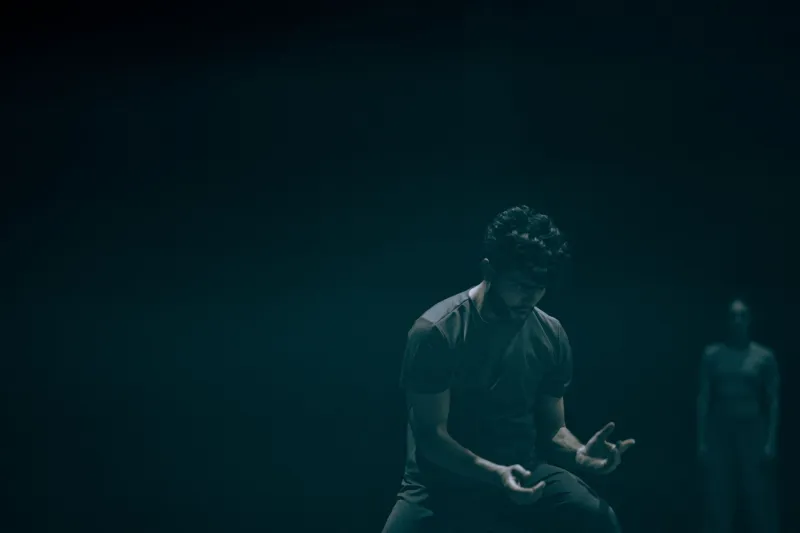
There's a moment in a lot of Yoshiko Chuma's performances — you might have caught it if you've seen her work live — where a dancer goes completely still. Not frozen-in-panic still. Not waiting-for-a-cue still. Something more deliberate. More loaded. Like the air around the body is actually holding its breath too. That stillness? It has a name. And it comes from somewhere most people wouldn't expect.
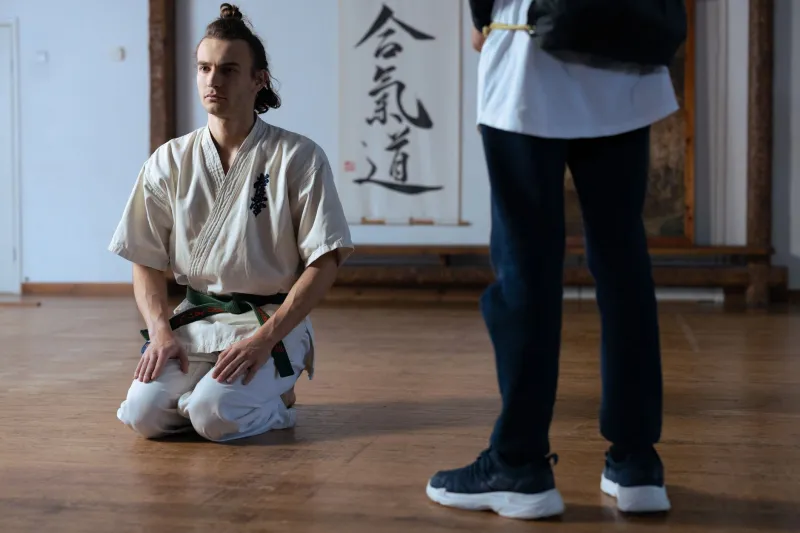
It comes from the dojo.
The conversation around Chuma's work tends to gravitate toward the obvious touchstones: the downtown Manhattan underground of the '80s, the influence of postmodern dance, her immigrant perspective, the chaos and joy of her collaborative process. All of that is real, all of that matters. But quietly embedded in her physical vocabulary — in the way her performers occupy space, transition between actions, and hold presence — is a set of principles rooted in Japanese martial arts traditions that she carried with her long before she ever set foot in a SoHo loft.
What the Dojo Actually Teaches You About Your Body
Martial arts training, at its core, is not primarily about fighting. That's the surface. Underneath, it's an education in spatial awareness, breath control, timing, and the relationship between intention and action. Practitioners spend years learning how to move with purpose — how to let nothing be accidental.
For Chuma, exposure to these disciplines as a young person in Japan meant that her baseline understanding of the body was fundamentally different from many of her Western contemporaries. Where some experimental choreographers arrived at minimalism through conceptual frameworks — Cage's chance operations, Cunningham's separation of movement from meaning — Chuma had a physical memory of it. She'd trained it into her nervous system.
Movement scholars who've spent time with her work point to this as a key differentiator. Her performers don't just move through space; they seem to negotiate with it. Every gesture carries a kind of accountability that's hard to fake and harder to teach in a studio if it isn't already somewhere in the body.
Ma: The Space Between Is the Point
In Japanese aesthetics and martial practice, ma (間) refers to negative space — the pause, the gap, the interval. It's not emptiness in a passive sense. It's emptiness as active ingredient. In a sword form, the space between strikes is where power accumulates. In music, it's the silence that gives the note its weight.
Watch Chuma's work with this concept in mind and it becomes almost impossible to unsee. The pauses in her choreography aren't breaks in the action — they are the action. Collaborators who've worked with her over the years describe a rehearsal culture where stillness is treated with as much rigor as movement. You earn the right to be still by understanding exactly what that stillness is doing.
This runs counter to a lot of Western performance instinct, especially in the high-energy, anything-goes spirit of downtown experimental art. The impulse is often to fill space, to keep the energy moving, to stay visible. Chuma's training gave her a different instinct: trust the gap. Let the absence speak.
Zanshin: Presence That Doesn't Clock Out
Another concept that shows up — invisibly but unmistakably — in Chuma's work is zanshin (残心), which translates roughly as "remaining mind" or "sustained awareness." In martial arts, it describes the state of continued alertness after an action is technically complete. You've delivered the strike, but your attention hasn't left the room. Your body hasn't relaxed into the assumption that it's over.
In performance terms, this translates into something audiences feel more than they consciously register: the sense that every performer onstage is fully present at every moment, not just when it's their turn to do something interesting. Chuma's stage pictures have a kind of all-over aliveness to them. Nobody's waiting in the wings of their own attention.
This is genuinely difficult to achieve in ensemble performance, and it's one of the things that makes her work feel different from a lot of experimental theater where the edges tend to go soft. Her collaborators often note that one of the first things she communicates to new performers isn't about steps or sequences — it's about where your attention lives when you're not the focal point. That's zanshin. That's the dojo talking.
Kata: Structure as Liberation
The third pillar worth examining is kata (型) — the structured forms that martial arts use to transmit knowledge across generations. Kata are sequences of movement practiced until they become reflexive, until the practitioner stops thinking about them and the body just knows. The paradox is that this extreme formalization is actually what enables genuine spontaneity. Once the form is deeply enough embedded, you can depart from it freely because you always know where home is.
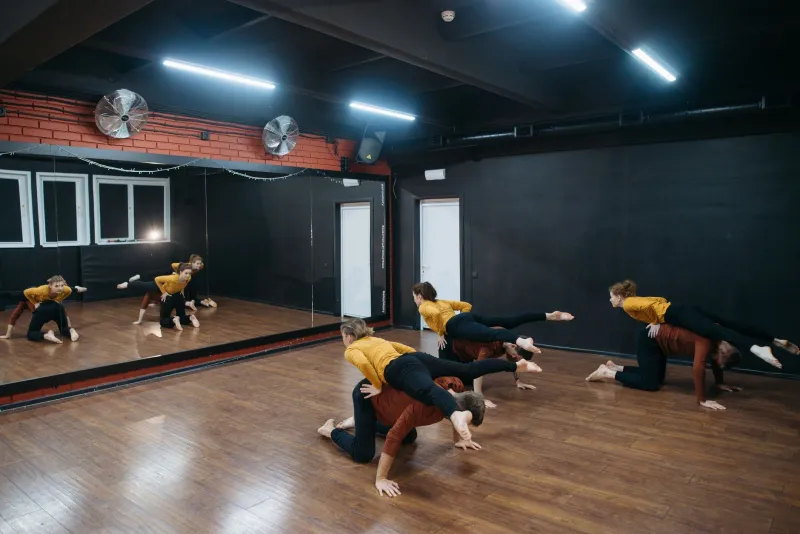
Chuma's choreographic process has always involved a tension between strict structure and wild improvisation that confuses people expecting one or the other. Her rehearsals can look chaotic from the outside — people moving in unexpected directions, tasks overlapping, the whole thing seeming to teeter on the edge of beautiful disorder. But longtime collaborators will tell you there's a skeleton under all of it. Forms that have been worked until they're automatic, which gives the performers the freedom to be genuinely present to what's happening in the room.
That's kata logic. The structure isn't a cage; it's a launching pad.
Bridging Two Worlds Without a Map
What makes this cross-disciplinary foundation so interesting — and so specific to Chuma — is that it wasn't a theoretical exercise. She didn't read about martial arts philosophy and decide to apply it to dance. She lived it first, in her body, in a completely different cultural context, and then brought it with her when she crossed the Pacific and landed in the middle of one of the most creatively explosive scenes in American art history.
The result was a kind of accidental synthesis. Eastern physical traditions meeting Western experimental frameworks, neither one dominating, both informing. Her downtown contemporaries were doing extraordinary things, but they were largely working within a single cultural inheritance, however radically they were dismantling it. Chuma was doing something structurally different — building from two distinct physical and philosophical traditions simultaneously.
That's not a small thing. It's arguably the source of everything that makes her work feel like it operates on a different frequency.
Why This Matters Now
In a contemporary performance landscape that increasingly values cross-cultural exchange and interdisciplinary practice, Chuma's work reads almost like a proof of concept — evidence that the most generative creative territory often lives at the intersection of traditions that don't obviously belong together.
But here's the thing: she wasn't making a statement about cultural fusion. She was just moving the way she knew how to move, drawing on everything her body had learned. The philosophy was already in there. She just gave it a stage.
And that stage, it turns out, was infinite.