You're Not Just Watching — You're Making It: Yoshiko Chuma and the Art of the Participatory Stage
You're Not Just Watching — You're Making It: Yoshiko Chuma and the Art of the Participatory Stage
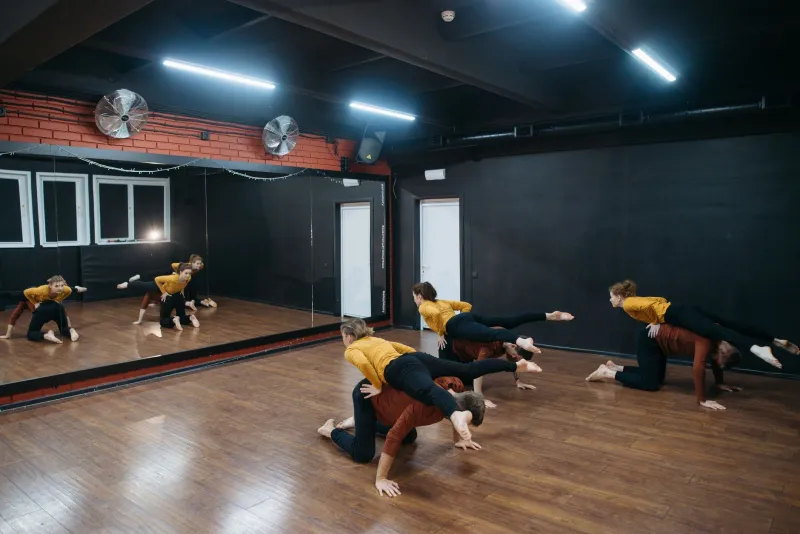
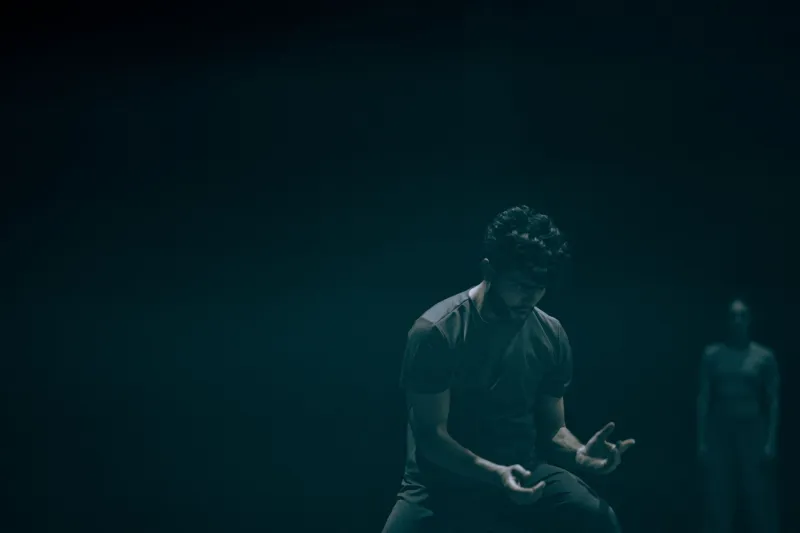
There's a moment in a lot of Yoshiko Chuma performances when something shifts. You came in as an audience member — ticket in hand, maybe a glass of wine, ready to observe — and then, without quite knowing how it happened, you're part of the piece. You're moving. You're being moved. The line between the stage and the seats has quietly dissolved, and you're standing on the other side of it.
That moment isn't an accident. It's the whole point.
Rethinking Who the Art Is For
For decades, the dominant model of American theater and dance has operated on a pretty clear contract: performers create, audiences receive. There's a stage, there's a seat, and there's a respectful, well-lit boundary between them. Yoshiko Chuma has spent her entire career quietly — and sometimes not so quietly — tearing that contract up.
Her philosophy isn't just about getting people out of their chairs for a fun interactive moment. It goes deeper than that. Chuma operates from a belief that creativity isn't a specialized skill reserved for trained artists. It's a human capacity. And when you design a performance that deliberately pulls spectators into the act of making, you're not just changing the show — you're making a statement about who belongs in the creative conversation.
In a country where access to the arts has long been stratified by class, education, geography, and cultural background, that's a genuinely radical idea.
The School of Hard Knocks (and Spontaneous Choreography)
Chuma founded her company, The School of Hard Knocks, in New York City in the early 1980s — right in the thick of the downtown experimental arts explosion that was reshaping what performance could even mean. The name alone tells you something. Hard knocks aren't pretty or polished. They're what happen when you actually engage with the world.
From early on, her work resisted the idea of the finished, hermetically sealed artwork. Instead, she built performances that were porous — open to interruption, to chance, to the energy that a specific group of people brought into a specific room on a specific night. Audiences weren't a passive variable. They were a creative ingredient.
This wasn't performance art gimmickry. Chuma wasn't just yanking people onstage for a laugh. She was building structures — loose, intelligent frameworks — within which genuine, unrehearsed human interaction could become the material of the piece.
What Participants Actually Experience
People who've been pulled into Chuma's orbit tend to describe the experience in surprisingly similar terms: disorientation, followed by something that feels a lot like permission.
One attendee at a site-specific work in lower Manhattan described being given a simple set of instructions — walk here, pause there, make eye contact with whoever you find — and discovering that following those instructions felt like unlocking something. "I stopped thinking about whether I was doing it right," she said, "and started actually being in the space. I was making decisions. It felt like it mattered."
That sense of mattering is crucial. In so much of contemporary American life, people feel like spectators to systems and stories that are happening without their input. Work like Chuma's offers a counter-experience — one where your presence, your choices, your body in space actually shape what unfolds.
Community as Creative Infrastructure
Chuma's participatory approach also connects to something deeply American, even as it critiques certain American assumptions. There's a long tradition in this country — from barn raisings to community theater to block parties — of collective making. The idea that a community comes together to build something that belongs to all of them.
Chuma taps into that tradition while also expanding it. Her performances have frequently crossed cultural lines, bringing together participants from radically different backgrounds and asking them to create something in real time, together, without a shared language or shared training. The result is a kind of community that doesn't depend on sameness — it depends on presence and willingness.
In an era when American public life feels increasingly fragmented, when the question of who belongs and who gets to speak feels more urgent than ever, that's not just aesthetically interesting. It's politically meaningful.
Dissolving the Expert Problem
One of the subtler things Chuma's participatory work does is challenge the authority of expertise. Not expertise itself — she's a deeply skilled choreographer and director — but the idea that expertise is the price of admission to creative expression.
When an untrained audience member finds themselves making genuine artistic decisions within the frame of a Chuma piece, something gets dislodged. The assumption that art is made by a special class of people, for a different class of people, quietly falls apart. What replaces it is something more democratic and, frankly, more interesting: the recognition that the capacity for creative response is something everyone carries around.
This is the through-line in Chuma's decades of work. Whether she's staging something in a black-box theater, an abandoned warehouse, a public plaza, or somewhere between all of those, she's consistently asking the same question: what happens when we stop treating the audience as a problem to be managed and start treating them as collaborators to be activated?
The Infinite Stage, Populated by Everyone
The "infinite stage" idea that runs through so much of Chuma's artistic vision isn't just about physical space — it's about who occupies that space and in what capacity. When the stage is infinite, there's room for everyone. Not as observers filling seats, but as participants filling the work itself.
That's a generous vision. It's also a demanding one. Participatory art asks something of its audience that passive spectatorship doesn't: attention, risk, the willingness to look a little foolish or feel a little uncertain. Not everyone is immediately comfortable with that ask.
But the people who lean into it — who accept the invitation Chuma extends — tend to come out the other side with something they didn't have going in. Not just a memory of a performance, but a felt experience of their own creative agency. The sense that they didn't just watch something happen. They made it happen.
In a world that often tells people their role is to consume, not create, that's a genuinely subversive gift.