Your Body Already Knows: How Yoshiko Chuma's Ideas Quietly Transformed Fields You'd Never Expect

Most people, if you asked them to describe the legacy of a downtown New York avant-garde choreographer, would picture something niche. Something for the kind of person who reads program notes and attends post-show discussions. Something, in other words, for dancers.
They'd be wrong. At least when it comes to Yoshiko Chuma.
The ideas she spent decades developing and performing — ideas about how the body holds knowledge, how physical awareness shapes decision-making, how movement is a form of intelligence — have traveled far beyond the black box theaters where she originally put them on their feet. They've shown up in places that would probably surprise even Chuma herself.
What Somatic Awareness Actually Means (And Why It's Not Woo)
Before we go further, let's clear something up. "Somatic" is a word that gets thrown around a lot in wellness circles, and it can sound vague or even a little mystical. But at its core, somatic awareness just means paying attention to what your body is telling you — not as a metaphor, but as literal data.
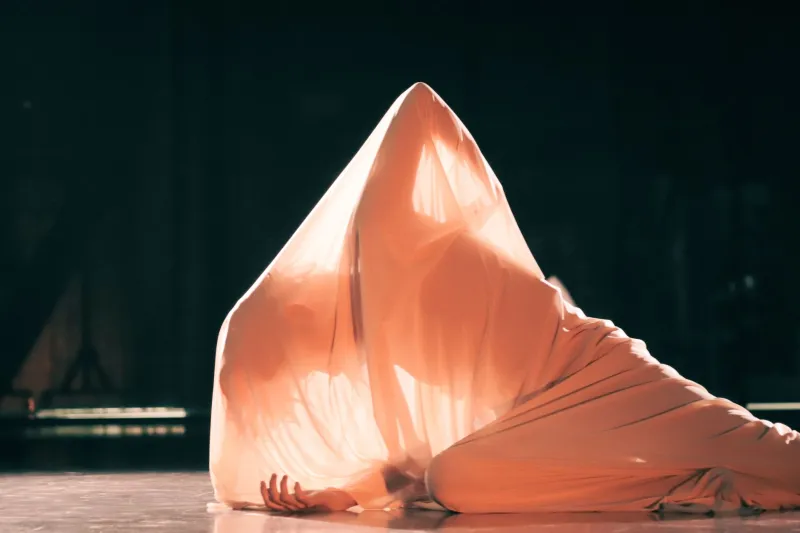
Chuma's work was deeply somatic in this sense. Her choreography didn't start from an intellectual concept that was then translated into movement. It started from the body itself — from sensation, weight, breath, the specific physical reality of a particular performer in a particular space on a particular day. The ideas came from the movement, not the other way around.
This is a fundamental inversion of how most Western institutions — schools, corporations, hospitals — are designed to operate. We're trained to lead with the mind and manage the body. Chuma's practice proposed something different: what if the body is smarter than we give it credit for?
Turns out, a lot of researchers and practitioners have been arriving at exactly that conclusion.
The Therapy Connection
Somatic therapy has exploded in the United States over the last decade. Modalities like Somatic Experiencing, developed by Peter Levine, and sensorimotor psychotherapy have moved from the fringes of clinical practice to the mainstream, with major trauma treatment centers now incorporating body-centered approaches as standard protocol.
The underlying premise — that trauma is stored in the body and must be processed through physical awareness, not just cognitive reframing — is something Chuma was exploring on stage long before it became a therapeutic framework.
Therapists who also have backgrounds in somatic movement or experimental dance often speak about the same things Chuma embodied: the idea that how we hold ourselves physically shapes how we experience the world emotionally, that breath is not just biology but communication, that the body's impulses carry information the thinking mind hasn't yet processed.
Chuma never claimed to be a therapist. But the territory she worked in and the territory that somatic therapy now occupies overlap in ways that are striking and worth examining.
Corporate America's Unlikely Debt to the Avant-Garde
Here's one you might not see coming. Over the past decade, leadership development and organizational consulting have quietly incorporated principles that sound a lot like what Chuma was doing in downtown lofts in the 1980s.
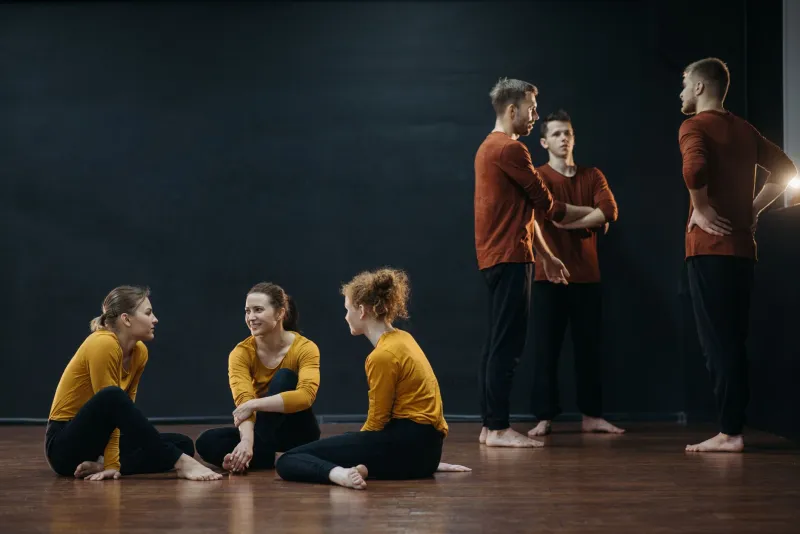
Companies like Google, Pixar, and a wave of design-thinking consultancies have invested heavily in what they call "embodied cognition" — the idea that physical experience shapes creative thinking in ways that sitting at a desk simply cannot replicate. Workshops that get executives out of chairs and into movement, exercises that use spatial awareness to unlock different kinds of problem-solving, approaches to collaboration that treat the room as a living system rather than a meeting agenda.
The through-line from Chuma's practice to these boardroom applications isn't always visible, and credit rarely flows upstream to its origins. But the conceptual DNA is there. The idea that how you move through space affects how you think. That loosening physical rigidity can loosen mental rigidity. That the best creative decisions sometimes come from the gut before they come from the PowerPoint.
Chuma's ensembles operated this way for decades before it became a LinkedIn thought-leadership trend.
Movement in Mental Health Spaces
Beyond formal therapy, movement-based approaches to mental health have been gaining serious traction across the US. Dance/movement therapy (DMT) is now a credentialed clinical discipline with its own professional association and graduate programs at universities across the country. Veterans' programs, community mental health centers, and school-based interventions are increasingly incorporating movement as a tool for regulation, expression, and connection.
The artists who pioneered this kind of thinking — who insisted that the body was not just a vehicle for the mind but an intelligence in its own right — include people like Chuma, who were never explicitly in the mental health space but whose work kept bumping up against its deepest questions.
What does it mean to be present in your body? How does physical practice change your relationship to emotion? Can movement create community in ways that talk cannot?
These are Chuma questions. They're also the questions driving some of the most exciting work in contemporary mental health.
The People Who Carry It Forward Without Knowing It
Perhaps the most fascinating part of Chuma's extended influence is how much of it is invisible. There are yoga teachers in Minneapolis who've never heard her name but who teach somatic awareness principles she helped articulate. There are improv theater coaches in Austin running corporate workshops on adaptive leadership who are, functionally, applying Chuma's choreographic logic. There are occupational therapists in community health clinics helping patients reconnect with their bodies using frameworks that trace back, through several generations of influence, to artists like her.
This is how the deepest ideas travel. Not always with attribution. Not always in recognizable form. But the shape of the thinking, the fundamental orientation toward the body as a site of knowledge — that persists.
For those of us who do know Chuma's name and her work, there's something both humbling and exciting about this. Her ideas are bigger than her biography. They've escaped the category of "dance" entirely and are living new lives in places she never performed.
That might be the most avant-garde thing she ever did.