Campus Revolution: How Yoshiko Chuma's Wild Pedagogy Is Quietly Rewriting Dance Education
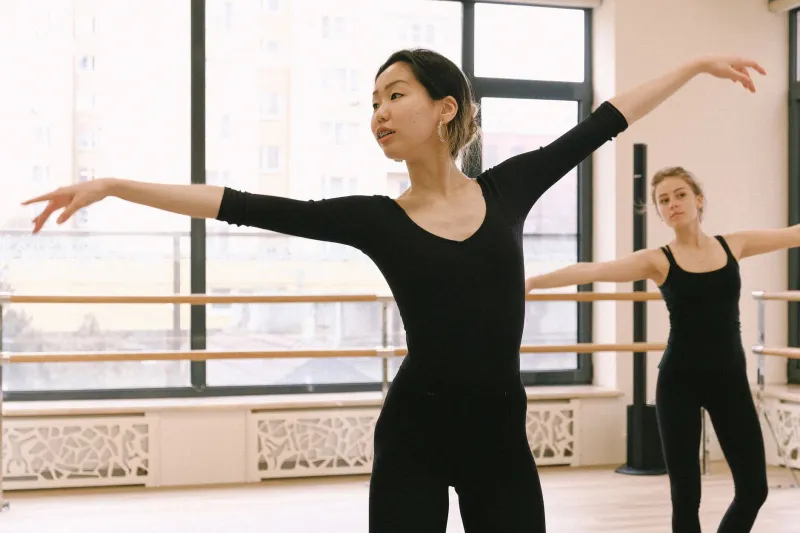
Something unusual is happening inside university dance departments across the country. Professors are throwing out their syllabi, students are rehearsing in parking garages, and the question "is this even dance?" is being treated as a feature, not a bug. Yoshiko Chuma's fingerprints are all over it.
For decades, Chuma operated at the margins of the American performance world — beloved downtown, celebrated internationally, but largely ignored by the institutional machinery of higher education. That's changing. Slowly, stubbornly, the ideas she's been living and breathing since she landed in New York have started seeping into university walls. And the results are genuinely strange, in the best possible way.
What Traditional Conservatory Training Gets Wrong
Let's be honest about what most university dance programs still look like: technique classes in the morning, repertory in the afternoon, a year-end showcase that mirrors professional company structures. Students learn to execute. They learn to be precise. They learn, above all, to follow.
Chuma's approach starts from the opposite end of the room. Her pedagogy — developed across decades of working with untrained bodies, professional dancers, visual artists, musicians, and anyone else willing to show up — insists that the most interesting thing about a mover isn't their technique. It's their attention. It's their willingness to be genuinely present in a space and respond to what's actually happening, not what's supposed to happen.
"She taught me that rehearsal isn't preparation for the real thing," says one emerging choreographer who trained with Chuma's company before completing an MFA at a major East Coast university. "Rehearsal is the real thing. That completely broke my brain when I first heard it, and then it completely rebuilt how I work."
The Ripple Through the Academy
At several progressive university programs — particularly those with strong interdisciplinary or experimental performance tracks — faculty who have direct or indirect connections to Chuma's lineage are reshaping curricula in ways that would have been unthinkable fifteen years ago.
Score-based composition, where dancers are given open-ended instructions rather than set choreography, is showing up in undergraduate courses. Site-responsive work — the kind Chuma has always championed, turning lobbies and rooftops and subway platforms into performance spaces — is being assigned as core coursework rather than elective adventure. The idea of the "ensemble as author," where no single choreographic voice dominates, is being discussed in seminar rooms that once only talked about the genius of the individual artist.
What's striking is how these shifts aren't happening because universities suddenly decided to honor Chuma's legacy. They're happening because the students and young faculty members who encountered her work — in downtown lofts, in touring performances, in workshops — brought those ideas back with them and refused to leave them at the door.
Presence Over Perfection
One of the most radical things Chuma's approach introduces into the university context is a fundamental reorientation of value. In a conservatory model, the premium is on polish. In Chuma's world, the premium is on aliveness.
This is harder to teach than it sounds. You can't grade aliveness on a rubric. You can't demonstrate presence by breaking it into components and drilling each one separately. What you can do — what Chuma has always done — is create conditions where students stop performing for an imaginary audience and start genuinely engaging with the actual room, the actual people, the actual moment.
"The first time I worked with material influenced by her methods, I cried in class," recalls a junior dance major at a Midwestern university whose professor had studied with artists in Chuma's orbit. "Not because I was sad. Because something real happened and I didn't know what to do with it."
That disorientation — productive, necessary disorientation — is part of the point. Chuma's philosophy has always held that comfort is the enemy of discovery. Universities, institutions designed to produce measurable outcomes, find this genuinely uncomfortable. The faculty members carrying her torch have to fight for it constantly.
The Institutional Tension
None of this is happening without friction. Dance departments are under pressure to produce graduates who can work in professional contexts, and professional dance still largely rewards technical mastery and stylistic legibility. Asking students to spend a semester making work that resists categorization is a hard sell to parents paying tuition and administrators tracking job placement rates.
But something interesting is happening on the other side of that tension. Graduates trained in this lineage are showing up in unexpected places — not just in experimental performance but in community arts organizations, in devised theater companies, in interdisciplinary arts collectives that didn't exist ten years ago. The field is widening, and Chuma's pedagogy, which was always about expanding the definition of what performance can be, turns out to be excellent preparation for a landscape that keeps changing its own rules.
Why This Matters Right Now
We're at a moment when the performing arts are genuinely grappling with questions of access, relevance, and community. Who is dance for? Who gets to make it? What does it mean to train a dancer in 2024 and beyond?
Chuma has been answering these questions with her body and her work for over four decades. The fact that universities are finally catching up isn't a triumph for the institution — it's a testament to the stubborn staying power of ideas that are genuinely true. Her approach survives the classroom because it was never about classroom rules in the first place. It was about what happens when a human being decides to fully inhabit the space they're standing in.
That's not a lesson you can un-learn. And apparently, it's contagious.