Play It Back: What the Raw Tapes of Yoshiko Chuma's Rehearsals Actually Show Us
Photo: Danielteolijr, CC BY-SA 4.0, via Wikimedia Commons
Most of what we think we know about any artist comes from the finished work. The polished performance, the reviewed show, the documented piece that made it into the archive under a proper title with a proper date. But the finished work is, almost by definition, the least revealing thing an artist makes. It's what survived the editing process. What got cut — what happened in the room before the room was ready — that's where the real story lives.
For Yoshiko Chuma, a recently surfaced collection of video documentation is starting to change what even her most dedicated followers understand about how she actually works. These aren't highlight reels. They're raw. Shaky camera work, ambient room noise, half-spoken instructions, dancers stopping mid-phrase to laugh or argue or try something completely different. And they are, in their own unpolished way, extraordinary.
What the Tapes Look Like
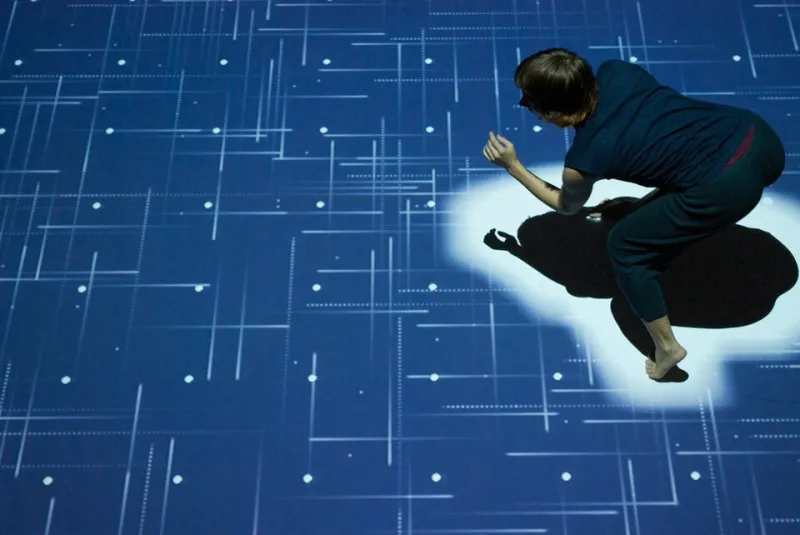
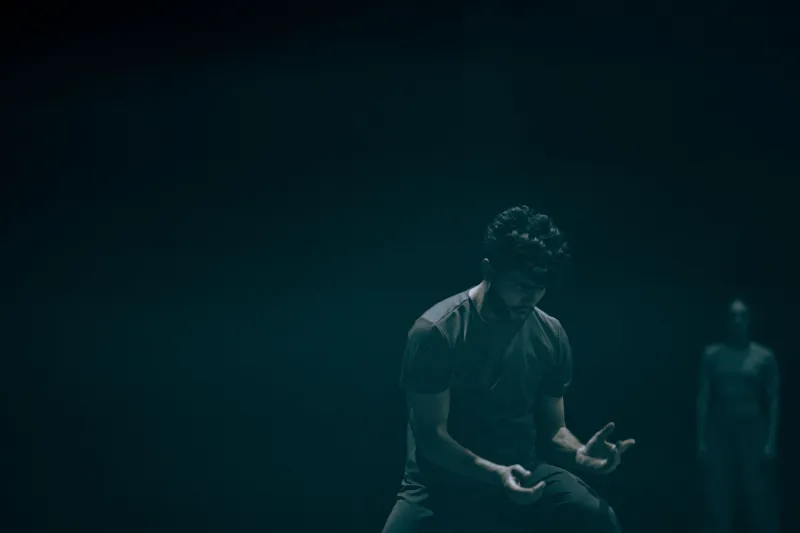
Let's set the scene. The footage spans multiple decades and contexts — studio rehearsals in what appear to be lower Manhattan spaces, outdoor sessions that look like they were shot in parks or on rooftops, teaching workshops where Chuma moves through a group of students with a kind of focused restlessness that's immediately recognizable even through a low-resolution lens.
The video quality varies enormously. Some of it looks like it was captured on VHS in the late '80s or early '90s — that particular warm, slightly degraded palette that now reads as both nostalgic and urgent. Other segments are sharper, clearly from a later period, though still obviously informal. Nobody's performing for the camera. The camera is just there, catching what it catches.
What strikes you first, watching these materials, is how talkative the process is. There's a popular image of avant-garde rehearsal as this silent, intensely physical space. Chuma's rehearsals, at least in this footage, are nothing like that. She's constantly in conversation — with the dancers, with herself, occasionally with whoever's holding the camera. She's asking questions. Proposing things tentatively. Changing her mind mid-sentence.
The Chuma You Didn't Know
One of the most striking things the archive footage reveals is the degree to which Chuma operates through genuine uncertainty. This might sound obvious — her whole philosophy is built around embracing the unresolved — but there's a difference between knowing that intellectually and actually watching it happen in real time.
In several segments, you can see her working through a structural problem in a piece and arriving at solutions that are clearly surprising to her. Not performed surprise. Actual surprise. She'll try something, watch it, and you can see her recalibrate — sometimes enthusiastically, sometimes with what looks like genuine frustration — before pivoting in a direction that wasn't on the table five minutes earlier.
This matters because it complicates the auteur narrative that sometimes gets attached to experimental artists. Chuma isn't executing a vision she fully formed in advance. She's discovering it, and she's doing it in the presence of other people whose contributions visibly shape what she discovers. The collaborative dimension of her process isn't just a philosophical commitment — it's functionally essential to how the work gets made.
Teaching as Thinking
The teaching footage is its own revelation. Chuma in a workshop setting is different from Chuma in rehearsal — more patient in some ways, more demanding in others. What's consistent is the quality of attention she brings to individual students. She's watching, really watching, in a way that's almost uncomfortably focused.
Several segments show her giving feedback that isn't really feedback in the conventional sense. She's not correcting technique. She's asking the student to notice something about what they just did — to locate a sensation, to follow an impulse further than they took it, to be honest about where they were actually going versus where they thought they were going. It's coaching as a form of phenomenological inquiry, and it's something you can't fully appreciate from reading a description of her teaching philosophy. You have to see it working on an actual person in an actual room.
What the teaching footage also shows is how much Chuma learns from her students. There are moments where a student does something unexpected and you can see Chuma file it away — not in a way that feels appropriative, but in the way that any genuinely curious artist processes new information. The exchange is real.
Evolution Across the Decades
Because the archive spans such a long period, it also functions as an involuntary autobiography. You can track shifts in Chuma's preoccupations, in the kinds of spatial relationships she's drawn to, in how she uses voice and language in relation to movement. Early footage shows a practice that's more densely physical, more interested in extremity and disruption. Later material is spacious in a different way — more comfortable with stillness, with duration, with the kind of quiet that isn't empty but loaded.
This isn't a story of an artist softening with age. It's something more interesting: an artist whose relationship to intensity has become more sophisticated. The disruption in the later work is harder to see coming, which makes it land differently.
Why This Matters Now
There's a practical argument for why this archive matters. As more artists and institutions look to Chuma's work as a reference point — and that's clearly happening — having access to the process, not just the product, is genuinely important. The finished performances can be cited and admired. The rehearsal footage can be learned from.
But there's a less practical argument too, and it's the one that keeps pulling us back to these tapes. Watching an artist think, in real time, without the benefit of retrospective polish, is one of the rarest things you can do. It's an act of intimacy that most artists never consent to, and most archives never capture. Whatever these tapes are — accidental document, lucky preservation, whatever — they're something close to irreplaceable.