Getting Close to the Work: A Real Guide to Experiencing Yoshiko Chuma's Art Right Now
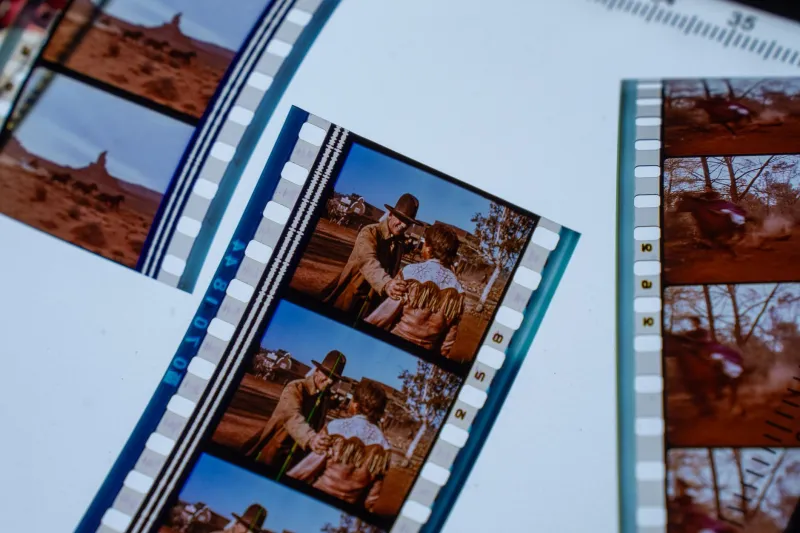
Here's the thing about live performance: it disappears. That's not a bug. That's the whole point. The moment a piece ends, it begins to exist only in the bodies and memories of the people who were in the room. Which means that for every Yoshiko Chuma performance you didn't catch — and if you weren't embedded in New York's downtown art scene from the early '80s onward, that's most of them — there's a real question about how you get close to the work at all.
The good news: you can. Not perfectly, not fully, not in the way that being in the room would have felt. But meaningfully. And honestly, the incompleteness of the encounter is part of what makes it so charged.
This is your guide to getting there.
Why the Gap Matters
Before we get into the practical stuff, let's sit with the reality for a second. Yoshiko Chuma's work was designed to be live. It was site-specific, ensemble-driven, often improvised at least in part, and deeply dependent on the energy of a particular room on a particular night. No recording fully captures that.
But here's what recordings and documentation do give you: a window into the structure of the thinking. The spatial logic. The relationship between performers and space. The texture of the movement vocabulary. These things survive the transition to screen better than the emotional atmosphere does, and they're enormously valuable for understanding what Chuma was up to.
Also — and this matters — engaging with documentation of ephemeral art is itself a practice. It requires you to do some imaginative work, to meet the archive halfway. That's not a lesser experience. It's a different kind of engagement, and in some ways it's more active than just sitting in a theater.
Where to Find Archival Footage
The most important starting point for anyone digging into Chuma's work is the New York Public Library for the Performing Arts at Lincoln Center. Their Jerome Robbins Dance Division holds one of the most extensive collections of dance and performance documentation in the world, and Chuma's work is represented there. If you're in New York, you can make an appointment to view materials on-site. If you're not, their online catalog (nypl.org) can at least tell you what exists and help you plan a research visit.
The Internet Archive (archive.org) is always worth searching for experimental performance documentation from the 1980s and 1990s. Coverage is uneven, but surprises turn up regularly. Search variations of her name and the name of her ensemble, The School of Hard Knocks.
Vimeo has become the de facto home for a lot of independent performance documentation, and artists and ensembles who've worked with Chuma have posted clips over the years. A dedicated search there — especially combined with related artist names — can surface footage you won't find anywhere else.
Youtube, for all its chaos, is also worth a regular search. Documentation gets uploaded by individuals, festival archives, and arts organizations without much fanfare, and it doesn't always stay up permanently. If you find something, download it.
Reading Into the Work
Don't underestimate written documentation. Interviews, program notes, and critical writing from the period when Chuma was most active offer something footage can't: direct access to how she and her collaborators talked about the work.
The Village Voice archives, now accessible through various digital newspaper databases (check if your local library has access), contain decades of coverage of the downtown performance scene, including reviews and features on Chuma. Reading a 1986 review of a piece while also watching documentation of it creates a layered experience that's genuinely illuminating.
Arts journals like TDR (The Drama Review), published by NYU, have covered experimental and avant-garde performance extensively. University library access, either in person or through alumni credentials, can get you into their digital archives.
Chuma herself has given interviews over the years that are scattered across arts publications, festival programs, and academic texts. Tracking these down takes some effort, but they're worth it. Hearing her describe her own intentions and process in her own words is irreplaceable.
Finding the Community
Here's something that often gets overlooked: the people who were in the room are still out there. Performers, collaborators, audiences, critics who saw Chuma's work live — many of them are active in arts communities across the US and internationally, and many of them are genuinely happy to talk about it.
Start with social media. Search for artists who've cited Chuma as an influence or who are documented collaborators. Follow them. Engage with their work. These connections can open doors to conversations and resources that aren't publicly indexed anywhere.
Arts organizations that focus on experimental performance — The Kitchen in New York, REDCAT in Los Angeles, On the Boards in Seattle — often program work by artists connected to Chuma's lineage, and their archives and community networks are worth exploring.
If you're in New York, the downtown arts community still maintains a culture of conversation and cross-pollination. Showing up to experimental performance events and mentioning your interest in Chuma is not a weird thing to do. It's exactly the kind of thing that community was built for.
Reconstructed and Influenced Work
Some of Chuma's pieces have been reconstructed or reimagined by artists she's worked with or influenced. These aren't the original performances, but they're not nothing, either. Watching a piece that carries Chuma's structural DNA — even if it's been filtered through another artist's sensibility — can give you a felt sense of the movement logic that documentation alone sometimes can't.
Keep an eye on programming at experimental venues. When you see names connected to Chuma's orbit in the credits, go. Even adjacently related work can be a way in.
Making Your Own Engagement Practice
Here's the honest truth: there's no single resource, no one archive, no perfect documentary that gives you the full Yoshiko Chuma experience. The work was designed to resist that kind of containment.
What you can do is build a practice of engagement. Watch a clip, then read a review of a related piece. Talk to someone who was there. Go see experimental performance in your own city with fresh eyes. Let Chuma's ideas about space, improvisation, and the body change how you watch everything else.
That's actually pretty close to what she was going for all along — not a passive audience consuming a finished product, but people actively in relationship with the work, bringing themselves to it, making meaning in the space between what's offered and what's received.
The archive isn't the destination. It's the beginning of a conversation.
Start it.